India's Digital Health Revolution: Better ICU Care For You
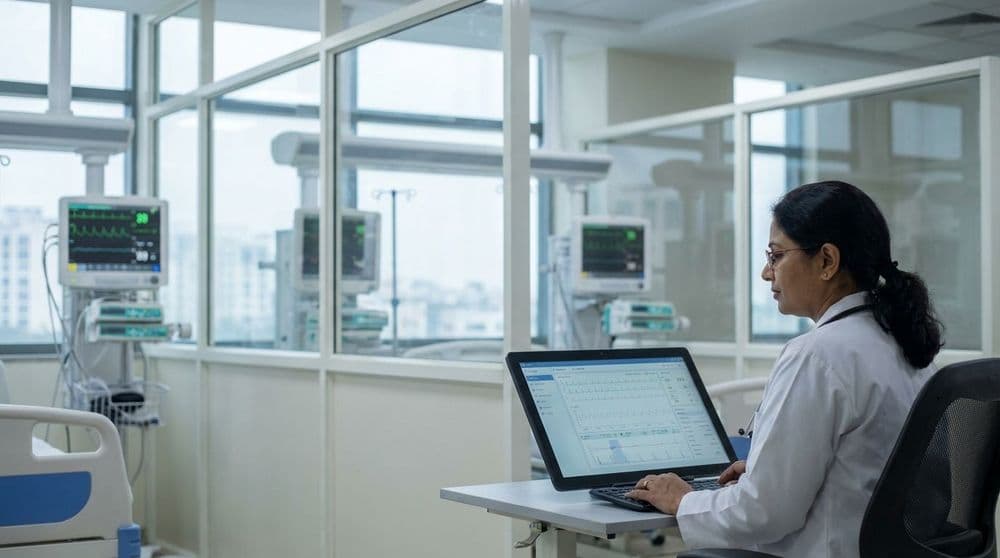
You swipe your phone to order food, pay bills, and connect with family. What if that same technology could save a life in a critical moment? That's the promise of the Digital Health Revolution in India, a powerful wave of change that is redesigning our healthcare system from the ground up. For families across North India, from the bustling streets of Delhi to the historic lanes of Lucknow, this isn't just a government policy; it's a new ray of hope for better, faster, and smarter medical care, especially when it matters most.
This revolution is powered by things we now take for granted: widespread mobile phones, affordable internet, and new-age technologies like Artificial Intelligence (AI). According to a report from the National Institutes of Health, the Indian government's response to rising mobile and internet connectivity has fundamentally changed our healthcare scene. It's about using technology to make healthcare more efficient, precise, and accessible for all.
The Digital Revolution in Critical Care (ICUs)
When a loved one is in the Intensive Care Unit (ICU), every second counts. This is where the digital health revolution is making one of its most profound impacts. Hospitals are transforming their critical care wards into 'smart' or 'electronic' ICUs (e-ICUs), using technology to provide a higher level of care.
What is an e-ICU?
Think of an e-ICU as a high-tech command center for patient care. It's a system that electronically links patients' bedsides to a central team of critical care specialists. As described in a perspective on e-ICUs, this platform allows doctors and nurses to store, remotely access, and monitor all patient data, from vitals and lab results to treatments. This means a senior intensivist in a major city could help manage a critical patient in a smaller town's hospital, all in real-time. This is a game-changer for ensuring expert care reaches every corner of the country.
The Power of AI and Predictive Analytics
Beyond just connecting doctors, new technology is making care smarter. Artificial Intelligence is now being used to analyze complex medical data much faster than a human ever could. For example, AI algorithms can read X-rays, CT scans, and MRIs with incredible accuracy, helping doctors make quicker diagnoses. In a critical care setting, this is vital. Some advanced systems, known as 'Digital Twins', analyze a patient's real-time data to predict potential problems before they even happen, allowing doctors to act proactively rather than reactively.
Enhancing Efficiency and Precision
The goal of technology in the ICU is not to replace the human touch but to enhance it. Digital tools are transforming ICU care by improving efficiency, precision, and responsiveness. Automated alerts can notify a nurse the moment a patient's vitals change, and digital records eliminate errors that can occur with handwritten notes. This frees up medical staff to focus on what they do best: providing compassionate, hands-on care to the patient.
How This Digital Shift Benefits Your Family
All this technology might sound complicated, but its benefits are simple and deeply personal. Here’s what it means for you and your family:
- Access to Top Specialists: Your location no longer has to determine the quality of your care. Through telemedicine and e-ICUs, you can get opinions from the best doctors without having to travel hundreds of kilometers.
- Faster and More Accurate Diagnosis: AI-powered tools can reduce the anxious waiting time for test results and provide doctors with more accurate information to guide treatment.
- Greater Peace of Mind: Knowing that your loved one is being monitored 24/7 by both on-site staff and remote specialists provides immense comfort during a stressful time. Some systems even allow for better communication between doctors, staff, and the patient's family.
This isn't a distant dream; it's happening now. The digital revolution is creating a more connected and intelligent healthcare ecosystem. While challenges like data security and ensuring everyone has digital access remain, the path forward is clear. It’s about leveraging the power of technology to build a healthier, safer India for all of us, ensuring that the best possible care is always within reach, whether you're at home or in the hospital.
Experiencing persistent symptoms? Consult Dr. Akshat Trivedi, a leading Critical Care Doctor in Lucknow in your area. Book Appointment
Have More Questions?
Find quick answers to common questions about our services, appointments, and patient care.
The digital health revolution refers to the integration of technology, such as mobile apps, telemedicine, AI, and electronic records, into healthcare systems to improve patient outcomes, enhance efficiency, and redefine how medical care is delivered.
A digital or electronic ICU (e-ICU) is a platform where all patient data, clinical profiles, investigations, and treatments are stored digitally. This allows for remote access and monitoring by a team of critical care specialists, improving the quality of care regardless of location.

“Your Health, Our Priority. Your Voice, Our Guide”
Dr.Nikhil Singh
Anaesthesia, MBBS, MD
Related Articles

Winter Allergies or Smog? Symptoms in North India
As winter descends on North India, it brings a familiar mix of health woes. This guide helps you tell the difference between winter allergies and symptoms caused by smog.
5 Tech Hurdles in Indian Healthcare We Can't Ignore
While technology promises to revolutionize healthcare, India faces significant challenges like poor infrastructure, high costs, and a digital skills gap. This article explores these critical limitations.

Pre-Anesthesia Checkup (PAC): A Guide to Surgical Safety
A Pre-Anesthesia Checkup (PAC) is a vital medical evaluation conducted before surgery to ensure patient safety. This guide explains the process, its importance, and what to expect.